Strengthening Local Food Systems - Where the project began...
I spent a large chunk of my late twenties to late thirties traveling, teaching and dabbling in farming. When arriving in a new place, finding where to source local food - whether it's restaurants, markets or your neighbours, this will tell you a lot about a place fast, and are key to my contentment with a place. This lens shaped my Masters of Education capstone project, which I recently completed at Cape Breton University. I started my degree when I returned to my home outside a small town in rural Alberta, and I asked myself, how do I curate a local food system I want to eat from?
My systems thinking brain moved through finding the local food initiatives, co-op models, farmers markets, and farm gate sales in the area. And then, as I started meeting some of my new neighbours. I got to meet people who were asking the same questions. Through these interactions, the question shifted to: How do I curate a local food system I want to eat with?
That question opened the door to thinking about how we can gather around this complex question of convening people around a healthy, local food system.
What tools, frameworks and knowledge has supported me in exploring these systems level questions in my career as an educator and leader?
I started my research with a synthesis of what I already knew, and how to start gathering people?
My educator brain wouldn't allow for keeping my research and insights to myself, so I created a key audience for the work - facilitators in community who want to move people forward together around food security and sovereignty.
That's this webpage.
Since publishing, I have received incredible feedback, including suggestions for improvement. Keep checking back to see how it evolves over time.
Want to know more about the project?
The video below was a required element and goes into more detail.
Grab yourself a cup of tea, and get comfy. This story, it's a bit of a long one.
Not interested in the back story? Scroll down for Chapter 2: The Final Project Overview (it's shorter).
Links to References from Chapter 1 video
Design Thinking Framework for Educators
A free toolkit and workbook to help you design meaningful solutions in the classroom, in your school, and in your community
UN Sustainable Development Goals
The 2030 Agenda for Sustainable Development provides a shared blueprint for peace and prosperity for people and the planet, now and into the future.
Literature Review
A summary of (some) research on the topic of mapping food systems, designing resilient human habitats and podcasts for academia.
An example of good collaborative work
The Energy Futures Lab is a non-profit that convenes, connects and catalyzes diverse innovators and influencers to address complex energy challenges in Alberta.
Original project proposal
Explains what I intended to do and with this project.
So, how did the Sustaining Emergence project unfold?
Settle in for the next chapter.
One last thing before you go...
One of the many discoveries I made in this project: the impact can be tracked on three levels - team, organizational and personal.
I spoke about the team and organizational levels impact of this project in my final report, but what about personally?
How did I curate a local food system I want to eat from?
Well, the "secret-not so secret" ingredient is weaving together relationships.
In relationship, I've been gifted food, curiosity, gardening supplies and inspiration.
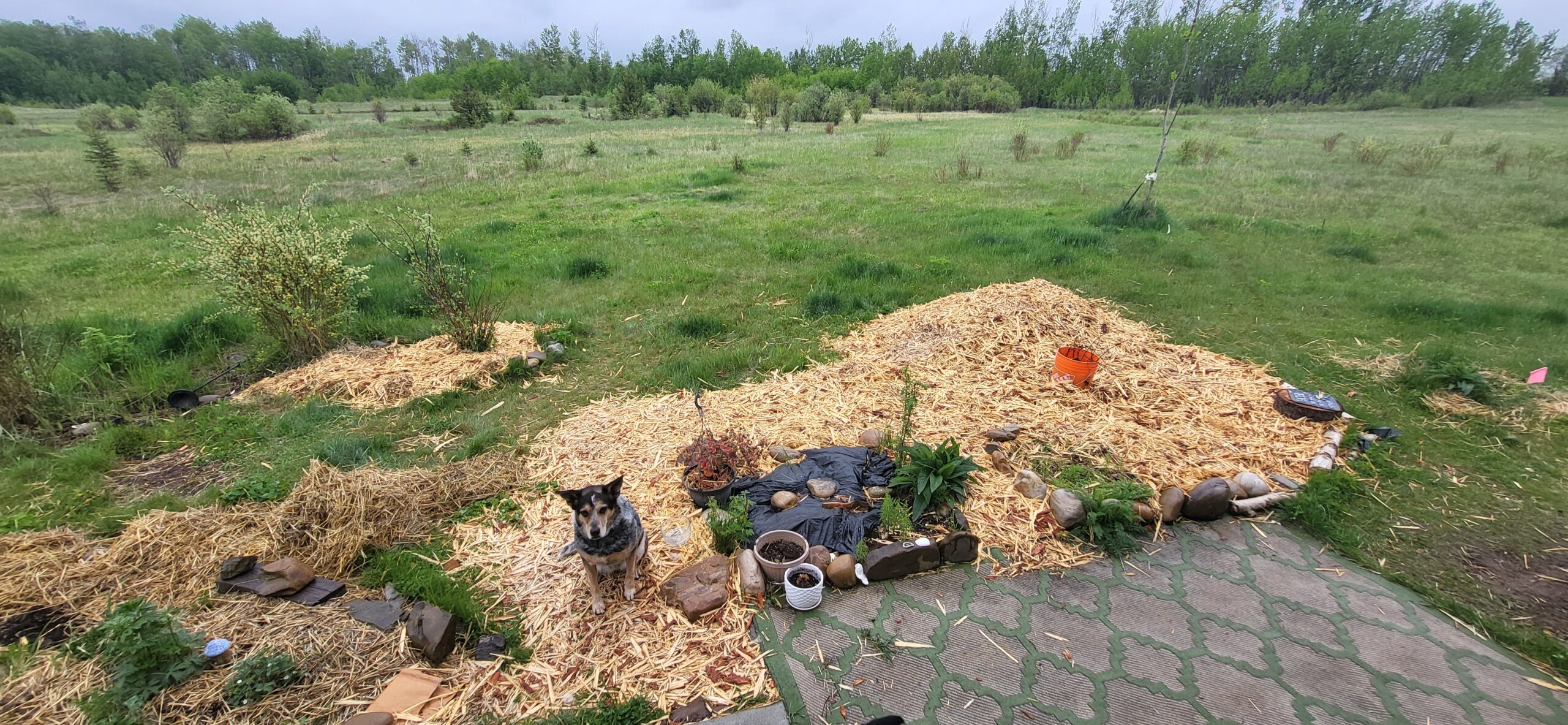
As a visual representation of those threads I’ve created a photo gallery from 2024 of the pieces of a local food system I've brought into my life. If you hover over the photos, it will tell you a little about them. Enjoy!




One last reflection...March 29, 2025
This morning, before sitting down to make some small adjustments, before sending this project through the portal to be submitted, to be deemed “complete” by the academic establishment, I was reading Robin Wall Kimmerer’s The Serviceberry: Abundance and Reciprocity in the Natural World.
The concept of a gift economy danced off the pages, and through my mind as a provoking lens to reflect on this project, aimed at cultivating a food system that I was to eat with. Many of the photos in the food photo essay above, are because of the gift economy.
By choosing to show up and participate in relationships, I was able to weave together a small corner of personal food security. Robin writes:
“In a market economy, the meat must be private property accumulated for the well-being of the hunter or exchanged for currency. The greatest status and success comes from possession and profit. Food security is assured by private accumulation.”
No. This is not the vision of food security I hold - I found myself saying out loud. She continues:
“Gift economies arise from the abundance of gifts from the Earth, which are owned by no one and therefore shared. Sharing engenders relationships of goodwill and bonds that ensure you will be invited to the feast when your neighbor is fortunate. Security is ensured by nurturing the bonds of reciprocity. Margaret Atwood writes, ‘Every time a gift is given it is enlivened and regenerated through the new spiritual life it engenders both in the giver and in the recipient.’ You can store meat in your own pantry or in the belly of your brother. Both have the result of keeping hunger at bay but with very different consequences for the people and for the land which provided that sustenance.”